
The performance of Apple's SoC is astonishing: modern technology that pushes data security to the forefront of concerns, at a controlled price.
Table of contents
Real-world use case
You're wondering whether switching to Apple Silicon M1 lives up to its promises: here is my analysis of the performance/price/power-consumption tradeoff.
Apple
Apple is a company founded in 1976 by Steve Wozniak, Ronald Wayne, and Steve Jobs. Apple's system is based on BSD (Unix) and was the first consumer system to have a graphical interface. History has shown us that Microsoft took inspiration from the Mac's graphical interface to create Windows, which they then massively deployed at IBM. A few years later, Apple was on the verge of bankruptcy, and that's when Microsoft bought shares to help Apple and negotiated an end to the lawsuits between the two firms. After that, they would no longer be in direct competition on the market.
Intellectual property
I want to be objective: I've always used proprietary technologies. Indeed, they gave me so many opportunities to discover new experiences and learn a great deal from. I have also often compared them to open-source solutions, sometimes unfairly. I started my digital life with Microsoft solutions like Windows, the Office suite, or Android systems by Google, which include their own solutions by design. As for hardware: HPE, Dell, Google, or OnePlus have always offered me different concepts that I gladly embraced, and I won't even get into my TV, which is quite proprietary as well.
Apple and other industry players make heavy use of intellectual property. It is protected by law and allows creators to gain recognition or financial benefit from their inventions or creations. Our hyper-globalized world, where everything seems very open, has nonetheless become technologically very closed. To be precise, choosing Windows 10 or Mac Big Sur is a matter of sensitivity to the experience we're looking for, simply a matter of taste. As for privacy topics, I'll let you read the terms of service of the publishers: Apple and Windows.
The MacBook Pro M1
In 2021, I chose a MacBook Pro M1. I understood well that if I moved closer to this exclusive environment, I would be shifting to new digital habits, while also opening up a wider range of possibilities through the synergy of iOS and Mac OS. I know the architecture of operating systems fairly well, but I had never felt the urge to get closer to Apple's offerings.
Over the course of my career, I have repaired Apple servers and machines running Mac OS X (from Leopard to Catalina), but at the time the experience on offer simply didn't appeal to me. Today, I've decided to switch to Apple for their M1 chip, their ongoing efforts to preserve their users' privacy, and the evolution of Mac OS toward Big Sur.
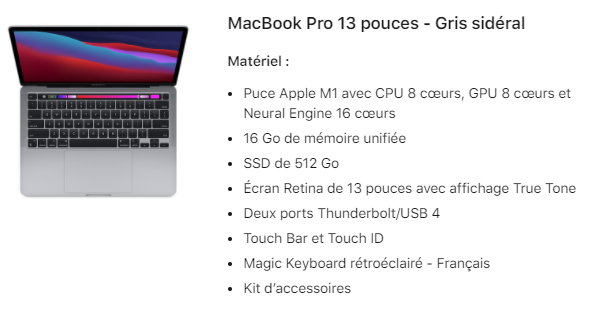
Here is the hardware configuration I chose to accompany me on my entrepreneurial journey:
The SoC revolution at Apple
Technically, the idea of designing an architecture for a laptop that's nearly identical to a tablet was, until recently, heresy. The SoC offered by the Cupertino firm delivers futuristic performance: ultra performance, reduced power consumption, and virtually no rise in temperature, hard to believe, and yet. This will probably even change our very perception of what a computer is. We can now talk about high-performance cores, high-efficiency cores, and unified memory.
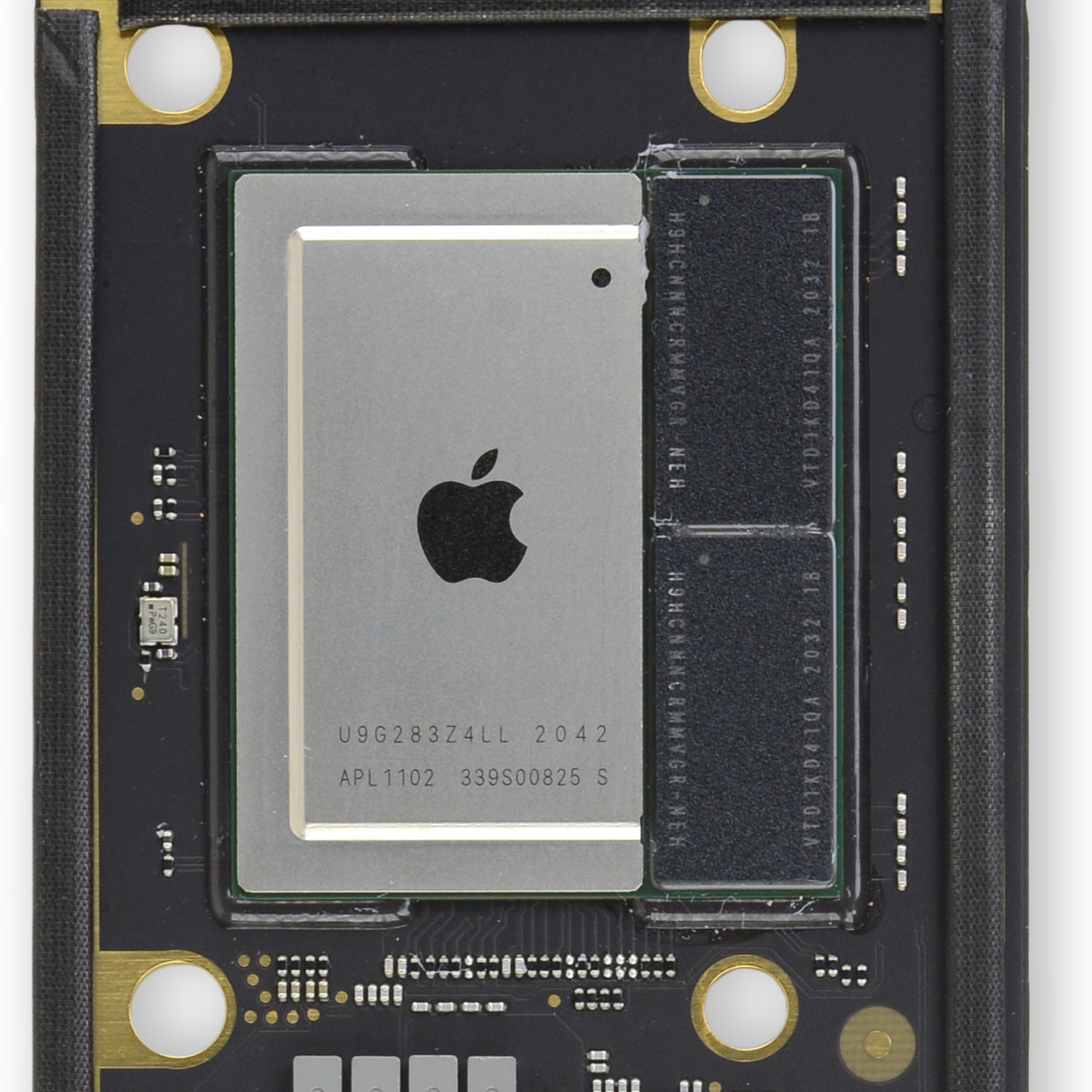
An image representing the work of Apple's R&D teams on the M1 chip:
Difference between a processor and an SoC
A classic processor seeks to maximize its performance. It is isolated from the computer's other components. For the SoC, it's a different story, since it packs a maximum number of components (previously separate) into a small space, in order to offer a more minimalist and cost-effective architecture while trying to speed up processing workloads. The data-processing elements are then brought into a single entry point, avoiding operations that previously slowed down the flow of information.
What is unified memory?
The RAM component is no longer isolated; it is now part of the same physical entity as the processor. It is directly integrated into the Apple M1 chip. This is precisely why we talk about unified power, since it speeds up transfers, and we do indeed see a performance difference between the old architecture and the new one.
Conclusion
I thought carefully before committing to Apple hardware. It turns out two crucial points mattered to me: hardware with robust cryptographic solutions without overloading the system, and a simplified user experience with a terminal close to Linux.